
Reliable Foundation Installation in Ashland
Ashland Concrete Solutions pours and repairs concrete foundations for homeowners throughout Ashland and the surrounding Rogue Valley. We build code-compliant foundations designed to give your home a stable, long-lasting base.
20+
Years in Business
4.9 ★
Google Rating
500+
Concrete Projects Completed
What a Concrete Foundation Installation Involves
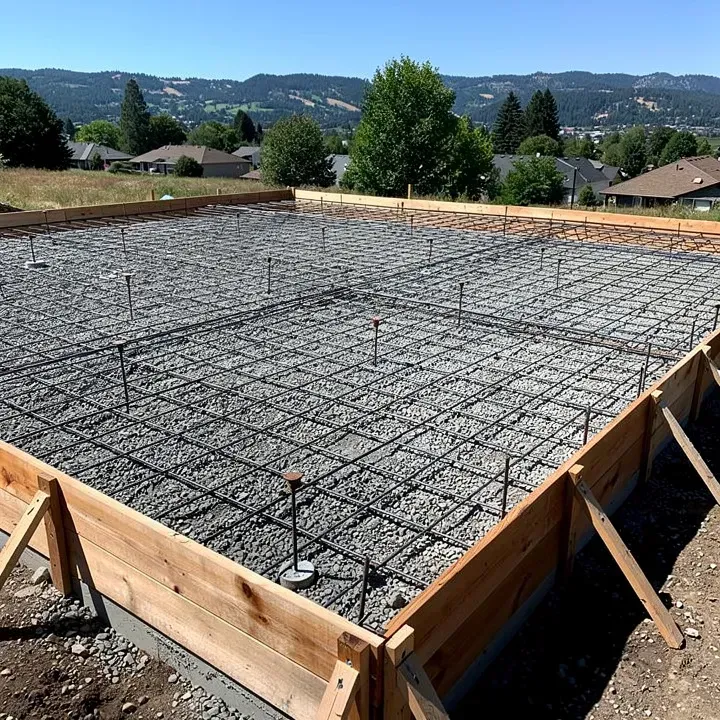
A concrete foundation is the structural base that supports the entire weight of a home, which makes it one of the most critical components of any construction project. The process involves excavating to the proper depth, preparing a compacted base, installing reinforcement, and pouring a slab or footing designed to meet local building code requirements for the size and weight of the structure above it.
Homeowners typically need this service when building a new home, an addition, a detached garage or workshop, or when an existing foundation has developed cracking or settling issues that require repair or partial replacement. Given how much rides on a foundation performing correctly for the life of the structure, this is one area where proper engineering and execution matter more than almost any other concrete project on a property.
A correctly installed foundation provides the stability that everything else in your home depends on, from level floors and properly closing doors to protection against moisture intrusion. Skipping proper steps during foundation work tends to surface as problems throughout the rest of the home over time, which is why we approach every foundation project with the same level of care regardless of size.
Who Needs This Service and Why It Matters
Homeowners typically need foundation work for new construction projects, additions, or detached structures like garages and workshops. Existing homes may also need foundation repair when cracks appear in the foundation walls or slab, when doors and windows begin sticking unexpectedly, or when noticeable settling becomes visible around the perimeter of the home.
The consequences of ignoring foundation problems are more serious than with almost any other concrete issue on a property. A foundation crack that starts small can widen as soil continues to shift, eventually compromising the structural support for the walls and roof above it. Water intrusion through foundation cracks can also lead to moisture damage in crawl spaces or basements, along with the secondary problems that come with that, including mold growth and wood rot in structural framing.
Because foundation issues tend to develop slowly and sometimes subtly, many homeowners don't recognize the early warning signs until the problem has progressed significantly. Sticking doors, uneven floors, or small cracks in interior drywall near corners can all be symptoms of underlying foundation movement that's worth having evaluated before it becomes a much larger and more expensive repair.
Our Foundation Installation Process
We begin with a thorough site evaluation, including soil conditions, the planned structure's weight and footprint, and any local building code requirements that apply to the project. Excavation follows to the depth specified by the design, after which we install proper footings sized to distribute the structure's weight appropriately across the soil.
Reinforcement, typically rebar, is placed according to the engineering requirements for the specific project, and forms are set to define the exact dimensions of the foundation. Plumbing and electrical rough-ins are coordinated at this stage if needed, since they have to be in place before the concrete is poured. Once everything is inspected and approved, we pour the concrete, working carefully to avoid voids or weak spots, and finish the surface appropriately for the structure being built.
After the pour, the foundation requires a proper curing period before any framing work begins on top of it. We monitor the curing process and coordinate timing with your broader construction schedule, whether that's a contractor building a new home or your own renovation plans for an addition or detached structure.
What Affects the Cost of a New Foundation
Foundation costs are influenced heavily by the size and design of the structure it will support, since larger or heavier buildings require more substantial footings, additional reinforcement, and more concrete overall. Soil conditions play a significant role as well. Sites with unstable or rocky soil often require additional excavation, engineering, or specialized footing designs to ensure adequate support.
The type of foundation also affects price. A simple slab foundation is generally more economical than a foundation with a crawl space or full basement, which require additional excavation, forming, and waterproofing work. Local permitting and required engineering review, which is mandatory for most foundation work, adds both time and cost compared to smaller concrete projects that may not require the same level of oversight.
Site access and existing conditions, particularly for foundation repair work on an occupied home, can also influence cost, since working around an existing structure is more complex than pouring a foundation on an open lot. We walk through all of these factors during a detailed site evaluation, since foundation pricing depends heavily on engineering specifics rather than a simple square footage estimate.
Frequently Asked Questions
How do I know if my foundation issue is serious?
Some signs are more urgent than others. Hairline cracks that aren't growing are often cosmetic and stable, while wider cracks, cracks that are actively widening, or secondary symptoms like sticking doors and uneven floors typically indicate active settling that needs a proper evaluation.
We assess each situation individually during a site visit, looking at the width, direction, and pattern of any cracking, along with other clues around the property, before recommending whether monitoring, sealing, or structural repair is the right next step.
Do I need an engineer involved in my foundation project?
Most new foundation construction requires engineering review as part of the standard permitting process through the City of Ashland or Jackson County, particularly for anything beyond a small detached structure. For foundation repairs, an engineer's involvement depends on the severity of the issue, and we'll let you know during our evaluation whether that additional step is necessary for your specific situation.
How long does foundation work typically take?
Timelines vary significantly based on the scope of the project. A straightforward slab foundation for a small structure might take a few days from excavation through pour, while larger foundations with footings, reinforcement, and required inspections can take one to two weeks. Foundation repairs on existing homes are typically faster but depend heavily on the extent of the damage being addressed.
Can you repair a foundation without a full replacement?
In many cases, yes. Depending on the cause and severity of the issue, foundation repair options include crack injection and sealing, partial section replacement, or reinforcement of specific areas showing signs of movement. Full replacement is generally reserved for foundations with widespread structural failure, which is relatively uncommon compared to localized, repairable issues.
Get a Free Estimate From Ashland Concrete Solutions
Whether you're dealing with a cracked driveway, a sunken patio, or planning a brand new project from the ground up, Ashland Concrete Solutions is ready to help. Give us a call or send us a message today, and we'll set up a time to walk your property, answer your questions, and provide a clear, no-pressure estimate so you know exactly what to expect.


Contact
(541) 502-3946
Mon–Sun: 7am–7pm
Ashland, OR
About Us
Ashland Concrete Solutions is a locally owned concrete contractor serving Ashland and the surrounding Rogue Valley. We help homeowners repair, replace, and build durable concrete features around their property, backed by honest pricing and workmanship you can count on. From Ashland to Medford and the neighboring communities in between, we're proud to be the contractor our neighbors call first.
© Copyright 2026 Ashland Concrete Solutions. All rights reserved.
© Copyright 2026 Ashland Concrete Solutions.
All rights reserved.